 Hollowpine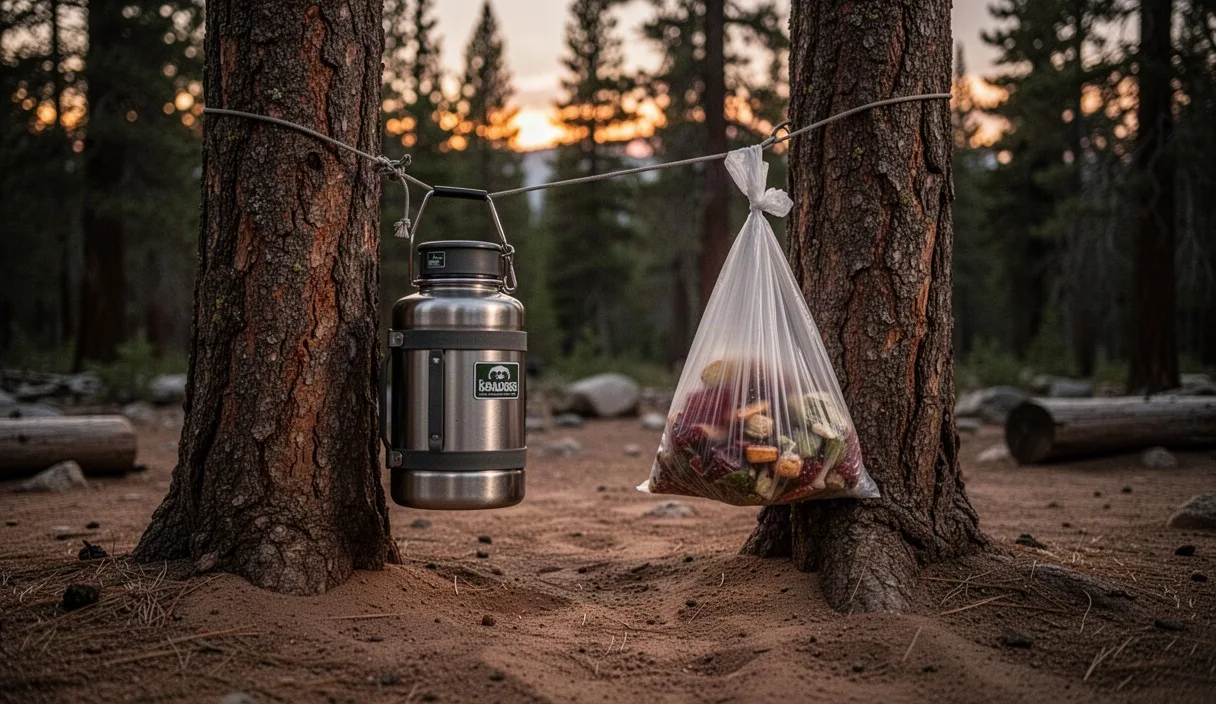
Bear encounters at camp are almost never about aggression. They're about habituation, a bear that learns a tent site means food gets a meal without much effort, and keeps coming back. That pattern is entirely preventable with the way you set up camp, not with luck. The checklist below covers the decisions that actually reduce risk: where you sleep, where you cook, how you store food, and what you do the moment you see a track or a scat pile that looks fresh.
None of this requires exotic gear. It requires discipline about distances, containers, and habits repeated every single night, even the night you're tired and just want to crawl into the sleeping bag. The nights you skip the routine are the nights that matter most, because bears test the same site repeatedly once they find a reward there.
Why Campsite Layout Matters More Than People Think
A bear's nose does the work long before its eyes or ears get involved. Black bears can detect food odors from over a mile away under the right wind conditions, and grizzlies aren't far behind. That means the physical arrangement of your camp, not just what you store food in, determines how much scent actually travels and how a bear approaches if it does show up.
The standard guideline used by the National Park Service and most backcountry permitting offices is a triangle layout: sleeping area, cooking area, and food storage each separated by at least 100 feet (roughly 30 meters), with the cook site downwind of the sleep site when possible. This isn't arbitrary. It gives a bear a buffer zone to investigate food smells without walking through where you're sleeping, and it gives you distance and time to react if something approaches at night.
Terrain matters too. A site tucked into a narrow drainage or dense brush limits your sightlines and the bear's escape routes, which raises the odds of a surprise close-range encounter. Open, slightly elevated ground with sightlines in at least two directions is safer than a shaded, enclosed pocket that looks scenic in photos.
Choosing a Site With Bear Activity in Mind
Before you pick a tent spot, walk the immediate area for 5 to 10 minutes looking for sign: tracks, scat, claw marks on trees, overturned logs, or matted-down grass that suggests bedding. Fresh scat (moist, dark, still forming a distinct pile rather than dried and scattered) means recent activity, often within the last day.
Avoid camping near natural food sources. Berry patches, fish-spawning streams, carcass sites, and oak or beech stands dropping mast in fall are all magnets. In grizzly country, riparian corridors with dense willow are especially high-traffic in spring and early summer. If you see a game trail running straight through a clearing, that clearing is a thoroughfare, not a campsite.
Established, designated campsites in national parks and forests are usually safer defaults than choosing your own spot, partly because rangers monitor them for bear activity and partly because repeated human use tends to condition bears to avoid the immediate tent pads, at least in areas with active hazing or aversive conditioning programs. If you're required to use a permit system with assigned sites, that's not just bureaucracy, it's a filtered list of locations with a track record.
Water sources deserve a second look. Camping right next to a stream or lake shore puts you on a natural bear travel corridor. A setback of 200 feet from the water's edge, when terrain allows it, keeps you off the most heavily used path.
Food Storage Options and How to Choose Between Them
The right storage method depends on where you're camping, and increasingly it's not optional; many wilderness areas mandate specific systems by regulation, not just by recommendation.
| Method | Best Used In | Approx. Weight | Notes |
|---|---|---|---|
| Hard-sided bear canister | Sierra Nevada, many Western US parks | 2 to 3 lbs empty | Required by regulation in several parks; holds 3-5 days of food |
| Bear hang (counterbalance) | Backcountry without canister mandate | Depends on rope/bag | Needs a branch 15+ feet up, 4 feet from trunk; harder to execute well than it sounds |
| Bear locker (metal box) | Established campgrounds, trailheads | Fixed installation | Provided at site; no setup needed, just use it |
| Odor-proof bags (not standalone) | Supplement to canister/locker | A few ounces | Reduces scent leakage but is not bear-resistant alone |
Bear canisters have become the default recommendation in most of North America because they don't depend on finding a suitable tree, they don't fail due to poor knot-tying, and they've been tested against both black bears and grizzlies by independent labs like the Interagency Grizzly Bear Committee. A canister costs between 70 and 90 dollars and typically weighs 2 to 3 pounds, which is a real pack-weight tradeoff worth planning for.
Bear hangs still work where required distances and branches exist, but field studies from Yosemite and other high-use parks documented black bears defeating counterbalance hangs regularly once they learned the technique, which is part of why canisters became mandatory there in the 1990s. If you're relying on a hang, practice it at home first; doing it correctly in the dark, tired, at 9 p.m. is a different skill than doing it in your backyard in daylight.
Setting Up a Cooking Area Separate From Sleep
Cook and eat at least 100 feet from your tent, and pick a spot with good ventilation and, ideally, a breeze carrying odors away from your sleeping area rather than through it. Check wind direction before you commit to a cook site; it can shift after sunset as temperatures drop and thermal winds start flowing downhill.
Never cook inside or near your tent, even in bad weather. Stove flare-ups aside, the fabric absorbs odor and there's no practical way to air it out fully overnight. If rain forces you to eat under a tarp, set that tarp up as part of your cooking zone, not attached to your sleeping shelter.
Wash dishes and dump graywater away from both your sleep site and any water source, at least 200 feet from open water per most Leave No Trace guidelines. Strain food particles out of wash water and pack them out or store them with your other food waste; don't scatter them, since even small scraps train animals to associate campsites with food.
Managing Scented Items Beyond Just Food
Bears investigate anything with a smell profile close to food, which is a longer list than most campers assume. Toothpaste, sunscreen, lip balm, insect repellent, deodorant, and even the wrapper your energy bar came in all belong in the same storage container as your actual food.
Clothes worn while cooking or eating retain grease and odor. Change into a separate set of "sleep clothes" that never touch food prep, and store the cooking clothes with your food storage overnight rather than in your tent vestibule.
A short list of items that regularly get overlooked and cause problems:
- Trash and food wrappers, even empty ones
- Pet food and pet bowls, if you're camping with a dog
- Water bottles that previously held sports drinks or flavored electrolyte mixes
- Feminine hygiene products, which should be stored and packed out like food waste
- Fishing bait, lures with scent additives, and the cooler that held them
If you're car camping, the same logic applies to your vehicle: roll up windows, and don't assume a locked car deters a determined bear. Documented cases in Yosemite and Yellowstone show black bears and grizzlies breaking into cars for coolers left visible on seats, sometimes causing thousands of dollars in damage in under a minute.
What to Do if You Spot Bear Sign Nearby
Fresh tracks, scat, or diggings near your chosen site are a signal to reassess, not necessarily to panic. Distinguish between old sign (dried, weathered, partially decomposed) and fresh sign (moist, strong odor, tracks with sharp edges not yet softened by weather). Fresh sign within a quarter mile of your site warrants relocating if you have daylight and options left.
If you hear woofing, jaw-popping, or see a bear standing and assessing you from a distance, that's typically defensive behavior, the bear wants space, not confrontation. Back away slowly, speak in a calm, normal voice so it identifies you as human, and do not run. Running can trigger a chase response in an animal that otherwise had no intention of pursuing you.
Carry bear spray in bear country and know how to use it before you need it, meaning read the instructions and practice the safety-clip motion at home. The EPA-registered products effective against bears use capsaicin concentrations around 1 to 2 percent and have an effective range of roughly 25 to 30 feet; deploying too early wastes the canister's short spray duration, usually just a few seconds.
If a bear approaches your camp at night and won't leave after you've made noise and gathered your group together, that's a situation for retreating to a vehicle or hard structure if one is available, and reporting the encounter to the land management agency the next morning. Repeated camp-approaching behavior gets logged and can affect whether an area stays open, so reporting matters even if nothing bad happened.
Pre-Sleep Checklist for a Secure Campsite
Run through this before you get into your sleeping bag, every single night, regardless of how tired you are:
- All food, trash, and scented items are in the canister, locker, or hang, not in your tent or pack
- Cooking clothes are stored with the food, not worn to bed
- Cook site is clean, wiped down, and at least 100 feet from the tent
- Trash from the day's snacks and wrappers is accounted for, not left in a jacket pocket
- Bear spray, if carried, is inside the tent within reach, not in the food storage area
- Headlamp and whistle are accessible without needing to unzip multiple bags
The bear spray placement is worth repeating because people get it backward: your food goes far from your tent, but your spray stays close to you, since it's a personal safety tool, not something you'd want to retrieve by walking 100 feet in the dark.
Common Mistakes
The most frequent error is treating bear-proofing as a one-time setup rather than a nightly routine. A canister that's properly closed on night one but left cracked open on night three because you were tired defeats the entire purpose.
A close second: assuming a "quiet" or "remote-feeling" campsite is automatically low-risk. Remoteness often correlates with less human traffic conditioning bears away from an area, which can mean more natural, unhabituated bear activity, not less.
Third, people underestimate scent from non-food items, particularly scented sunscreen and lip balm, both of which have caused documented tent investigations by black bears in the Smokies and Sierra.
Next Steps
Before your next trip, check the specific regulations for the land you're visiting; many national parks and forests publish bear-specific rules by district, and some areas require permits that specify approved storage methods. If you're new to bear country or heading somewhere with a recent history of human-bear conflict, a call to the ranger station or land management office beforehand will get you current, site-specific information that a general checklist can't provide. Practice your bear hang or canister packing at home first, time yourself, and adjust your kit until the routine takes less than 10 minutes, because that's roughly how long you'll want it to take at the end of a long day on trail.