 Hollowpine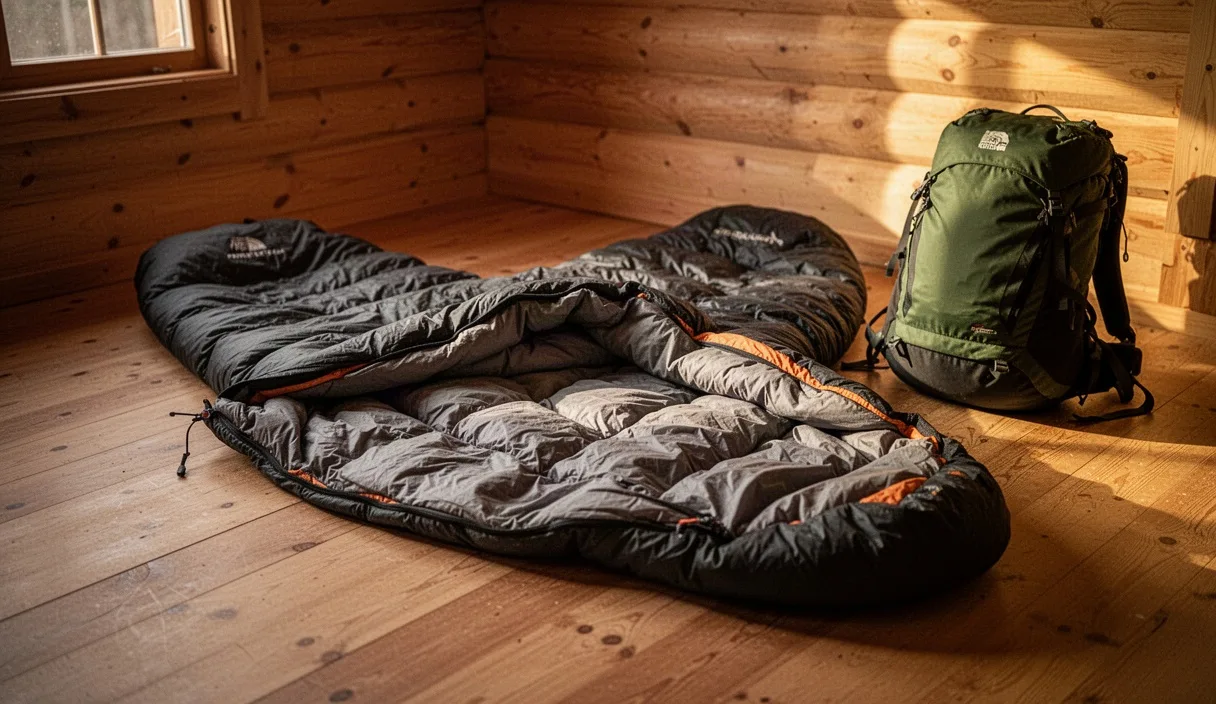
Every sleeping bag argument at the trailhead eventually comes down to one question: down or synthetic. Both fills keep you warm by trapping air, but they behave so differently in the field that the choice affects your pack weight, your morning routine, and how many seasons the bag will actually last. Picking the wrong one doesn't ruin a trip by itself, but it does make cold nights colder and wet nights miserable.
This guide breaks down the mechanics of each fill, where the real performance gaps show up, and how to match your choice to the conditions you actually camp in rather than the conditions you wish you camped in. The goal is a decision you can defend with numbers, not brand loyalty.
How Down and Synthetic Insulation Actually Work
Down is the fine plumage found under the feathers of geese and ducks. It has no quills, just a cluster of soft filaments that trap air in thousands of tiny pockets. That trapped air is the actual insulator, not the down itself. Down is rated in fill power, a number from about 500 to 900+ that measures how many cubic inches one ounce of down occupies when fully lofted. Higher fill power means more air trapped per ounce, which means less down (and less weight) is needed to hit a given warmth level.
Synthetic insulation is made of polyester fibers engineered to mimic down's loft, either as short staple fibers (like PrimaLoft) or continuous filaments (like Climashield). These fibers are less efficient at trapping air per gram than high fill power down, so a synthetic bag rated to the same temperature as a down bag will almost always weigh more and pack larger. There's no single "fill power" equivalent for synthetics; manufacturers instead publish the bag's overall weight and temperature rating, which makes side by side comparisons harder than they should be.
Both fills lose effectiveness once compressed, which is why the shell fabric, baffle construction, and how tightly you're wrapped in the bag also affect real world warmth. A bag's temperature rating (usually tested to EN 13537 or ISO 23537 standards) reflects lab conditions with a base layer, not how you'll actually sleep after a 12-mile day.
Warmth to Weight: Where Down Wins and Why
Down's advantage is almost entirely about weight and pack size for a given temperature rating. An 800 fill power down bag rated to 20°F typically weighs between 1 lb 12 oz and 2 lb 4 oz depending on brand and shell fabric. A synthetic bag with the same 20°F rating commonly weighs 2 lb 12 oz to 3 lb 8 oz. That difference of roughly a pound doesn't sound dramatic until you're on day four of a thru-hike and every ounce in your pack has been fighting you since mile one.
The fill power number matters more than most buyers realize. A 900 fill power bag needs noticeably less down by weight than a 600 fill power bag to hit the same loft and warmth, which is why ultralight backpackers pay a premium for higher fill power rather than just buying more down. As a rough guide:
- 600-650 fill power: budget to mid-range down, heavier for the warmth delivered
- 700-800 fill power: the sweet spot for most three-season backpacking bags
- 850-900+ fill power: ultralight and expedition bags where every ounce is counted
Synthetic fill can't close this gap with current fiber technology. Manufacturers have narrowed the difference with fibers like Climashield APEX, but a synthetic bag competitive in warmth-to-weight with a 700 fill power down bag still typically runs 20 to 30 percent heavier. If you're backpacking more than 6 or 7 miles a day with a full pack, that difference shows up in your knees before it shows up in a spec sheet.
What Happens to Each Fill When It Gets Wet
This is where the down versus synthetic debate gets practical instead of theoretical. Down clusters collapse when wet. The filaments stick together, the air pockets disappear, and insulating value drops sharply, in some tests losing more than half its loft after just a light soaking. A soaked down bag can take a full day or longer to dry in the field, sometimes longer if there's no sun and no wind.
Synthetic fibers don't absorb water the way down does. They stay lofted enough to retain a meaningful portion of their insulating value even when wet, and they dry noticeably faster, often in a few hours near a fire or in direct sun versus a full day or more for soaked down. This is the main reason synthetic bags remain standard gear for river guides, sea kayakers, and anyone camping in the Pacific Northwest's wet coastal belt from November through March.
Hydrophobic down treatments (DownTek, Nikwax Hydrophobic Down) have narrowed this gap. Treated down resists water absorption longer and dries faster than untreated down, but it still doesn't match synthetic fill once fully saturated. Treat the coating as a buffer against condensation and light moisture, not a reason to treat your down bag as waterproof. If you're paddling, canyoneering, or camping in a region with a wet season most of the year, that buffer often isn't enough on its own.
Packability and Compression Differences
Down compresses into a noticeably smaller stuff sack than synthetic fill rated to the same temperature. A 20°F down bag commonly compresses to somewhere around 8 by 13 inches, while a comparably rated synthetic bag often compresses to 10 by 16 inches or larger. For backpackers running a 40 to 50 liter pack, that difference determines whether the bag eats a third of your pack volume or closer to half.
Down also recovers its loft after compression more reliably over hundreds of pack-and-unpack cycles. Synthetic fibers, especially short staple types, gradually lose some resilience each time they're compressed hard, meaning a synthetic bag's packed size may creep up slightly over a few seasons of heavy use as the fibers stop fully rebounding.
For car camping and short trips where pack volume isn't a limiting factor, this difference matters far less. A synthetic bag that takes up an extra 20 percent of trunk space costs you nothing when the trunk isn't full anyway. Packability differences matter most for backpacking, bikepacking, and any trip where you're carrying the bag on your body for multiple days.
Durability and Long Term Care for Each Type
Down bags, properly cared for, commonly last 10 to 15 years or longer, with fill power loss being gradual rather than sudden. The main threats are repeated compression without airing out, body oils breaking down the down's natural structure over time, and moisture exposure without proper drying. Down should be washed infrequently, roughly once every season or two of regular use, with a down-specific detergent like Nikwax Down Wash, then tumble dried on low heat with a few clean tennis balls to break up clumps.
Synthetic fill degrades faster under repeated compression. Most synthetic bags show measurable loft loss after 3 to 5 years of frequent use, sometimes sooner if stored compressed in a stuff sack rather than loosely in a mesh storage bag. This is the single most common care mistake with synthetic bags: leaving them compressed between trips instead of storing them loose, which accelerates fiber breakdown.
Storage habits matter for both fills, but the consequences differ. A down bag stored compressed for months will usually recover most of its loft after a wash and a proper fluff cycle. A synthetic bag stored the same way often won't fully recover, because the fibers themselves have lost resilience rather than simply clumped together.
Cost Comparison Over the Life of the Bag
Upfront price favors synthetic. A synthetic bag rated to 20°F from a mid-range brand commonly runs $120 to $200. A comparable down bag with 700-800 fill power commonly runs $280 to $450, with 900 fill power ultralight bags pushing past $500. That price gap is real and matters for anyone buying their first bag on a limited budget.
The long-term math shifts depending on how often you use the bag and how you treat it. Over a 10-year span, someone replacing a synthetic bag every 4 years due to loft loss might spend $300 to $500 total, while someone buying one well-cared-for down bag might spend $350 to $450 once and still be using it. Frequent backpackers who put in 20+ nights a year tend to come out ahead with down over a decade. Occasional car campers doing 5 or 6 nights a year rarely wear out a synthetic bag fast enough for the down premium to pay off.
| Factor | Down | Synthetic |
|---|---|---|
| Upfront cost (20°F bag) | $280-450+ | $120-200 |
| Typical lifespan | 10-15+ years | 3-5 years heavy use |
| Weight (20°F rating) | 1 lb 12 oz - 2 lb 4 oz | 2 lb 12 oz - 3 lb 8 oz |
| Wet performance | Poor, slow to dry | Fair, dries faster |
Matching Fill Type to Your Typical Trip Conditions
The decision gets easier once you stop asking which fill is better and start asking which fill fits your actual trip log from the last two years. Someone who backpacks dry mountain trails in Colorado or the Sierra from June through September, where humidity is low and precipitation is rare, gains little from synthetic's wet-weather advantage and loses real weight carrying it.
Someone who kayaks coastal routes, hikes in the Pacific Northwest, or camps in regions with regular rain has a genuinely different calculation, since down's wet-weather weakness shows up far more often in that environment. A few practical guidelines:
- Frequent dry-climate backpacking, weight and pack size matter most: down, ideally 700+ fill power
- Wet coastal or rainforest environments, river or sea kayaking: synthetic, or hydrophobic-treated down as a compromise
- Car camping, short trips where pack weight isn't a factor: synthetic, lower cost with fewer care requirements
- Budget-limited first bag for occasional use: synthetic, since the down premium won't pay off before conditions or interests change
- Expedition or high-altitude cold where every ounce counts and moisture can be managed: high fill power down (850+)
Some backpackers carry two bags for this reason, a lightweight down bag for dry season trips and a synthetic bag for shoulder-season or wet-region trips. That's a reasonable approach if budget allows it, but for most people owning one well-matched bag beats owning two mediocre compromises.
Common Mistakes
The most frequent mistake is buying a down bag based purely on temperature rating without checking fill power, then being surprised when it's bulkier and heavier than expected. Another is storing either type of bag compressed in its stuff sack between trips, which shortens the usable life of synthetic fill in particular. A third is assuming hydrophobic-treated down is fully waterproof and skipping a dry bag or pack liner on a trip with real rain exposure, when the treatment only buys extra time before performance drops. Finally, many buyers ignore the EN/ISO "comfort" versus "limit" rating distinction, and end up cold at a temperature the tag technically claims the bag can handle.
Next Steps
Pull up your last two years of trip logs and note the average nighttime low, the humidity or rain frequency, and how many miles you carried gear per day. That data, not marketing copy, should drive the fill choice. If you're still unsure, visit an outdoor retailer that lets you handle both fill types side by side, compress a floor model, and compare the packed size against your actual pack volume before buying. For serious cold-weather or high-altitude trips, it's worth consulting an experienced local guide or outfitter about fill choice and layering, since generic temperature ratings won't account for wind exposure or elevation-specific conditions at your destination.